
The allure of gothic horror lies in its ability to transform physical spaces into vessels of psychological torment. When you step into a story dominated by a crumbling mansion or an isolated estate, you are not merely entering a backdrop; you are stepping into a physical manifestation of the characters’ deepest anxieties, generational trauma, and existential dread. Compelling gothic horror books use these architectural giants to trap both their protagonists and readers in an inescapable atmosphere of suspense, where every creaking floorboard and shadow-drenched corridor whispers of secrets that refuse to remain buried.
What Makes a Compelling Gothic Horror Setting?
To understand the power of gothic horror settings, one must look closely at the architectural and geographical elements that define them. Oppressive architecture serves as the foundation of this subgenre. Crumbling stone walls, labyrinthine floor plans, hidden passages, and decaying wings do more than just evoke a sense of antiquity; they actively disorient the inhabitant. These structures are often designed with deliberate irregularities—angles that seem slightly off, rooms that lead nowhere, and windows that look out onto desolate landscapes. This physical distortion mirrors the internal instability of the characters, making the act of navigating the house a psychological trial.
Geographical isolation amplifies this architectural dread by cutting off any hope of external salvation. Whether situated on a remote cliffside, surrounded by treacherous salt marshes, or buried deep within an overgrown forest, these estates exist in a vacuum. The distance from modern society and its comforting rationalism forces characters to rely entirely on their own increasingly compromised senses. In this isolation, the passage of time becomes fluid, and the boundaries between the past and the present begin to dissolve.
Products mentioned in this guide
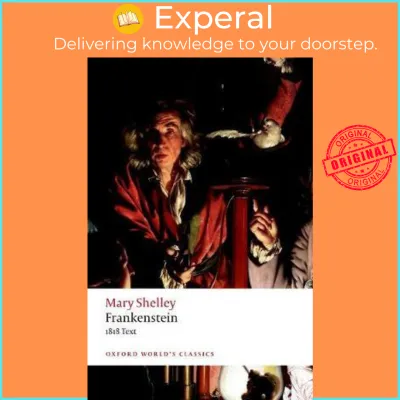

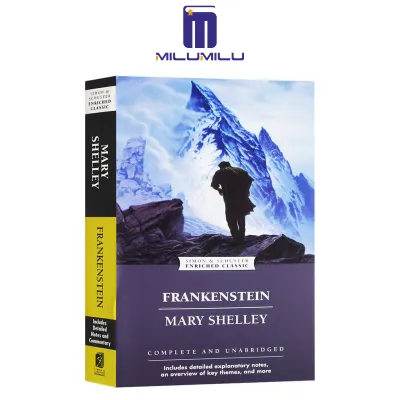
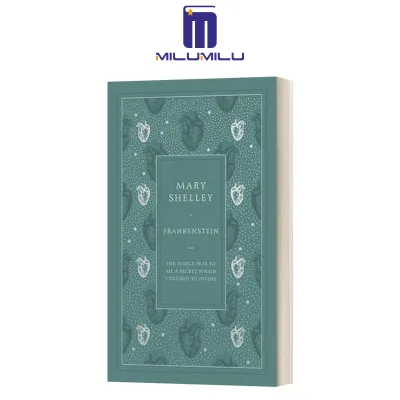
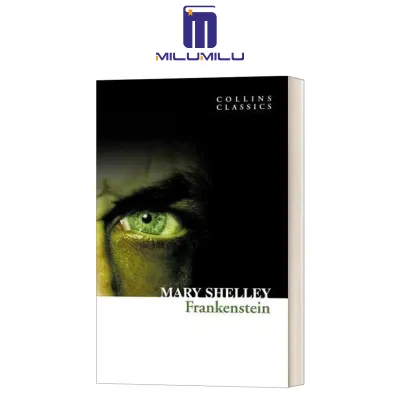
1 Lazada user ratings
💰Price:Great 📚Content Quality:Great 🔍Quality:Great ✍️Author:Great 📝Content:Great *Awesome Purchase! *Sister liked it! *Item is as advertised …Read full reviewShow less
💰Price:Great 📚Content Quality:Great 🔍Quality:Great ✍️Author:Great 📝Content:Great *Awesome Purchase! *Sister liked it! *Item is as advertised on the product page *No damage on the packaging or the item itself *Paying & receiving the item from the Delivery Courier was a breeze *Will order more from the Seller & Lazada! KUDOS!
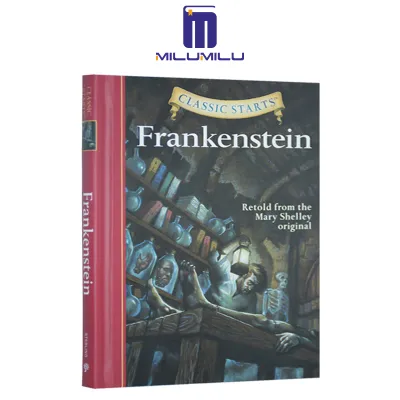
Prices are valid at publication and may change. Please refer to the product page for the latest price.
Ultimately, the most effective gothic estates cease to be passive settings and instead function as central characters or antagonists. The house possesses its own agency, history, and malice, often acting as a physical manifestation of unresolved trauma or ancestral guilt. It watches, it reacts, and it slowly consumes those who dare to cross its threshold. When you read a gothic novel, the estate is the force that drives the narrative forward, shaping the psychological landscape of everyone trapped within its walls.
Classic Haunted Mansions and Psychological Dread
When exploring the foundations of gothic literature, certain estates stand out for how they weaponize psychological ambiguity and architectural wrongness. Shirley Jackson’s The Haunting of Hill House is widely regarded as a masterpiece of this form. The novel introduces us to Hill House, a structure built by the eccentric Hugh Crain, characterized by its non-Euclidean geometry and doors that close by themselves. Jackson does not rely on traditional ghosts or cheap jump scares; instead, the terror of Hill House lies in its subtle, persistent manipulation of the protagonist, Eleanor Vance. The house seems to search for Eleanor’s vulnerabilities, gradually dissolving the boundary between her fragile psyche and the physical structure itself until the two become tragically inseparable.

In contrast to the psychological fluidity of Hill House, Susan Hill’s The Woman in Black delivers a masterclass in traditional, atmospheric isolation. The story centers on Eel Marsh House, a decaying estate situated at the end of Nine Lives Causeway. Cut off from the mainland by the daily high tide, the house is surrounded by treacherous salt marshes and perpetual sea mists. This physical barrier creates an intense sense of claustrophobia despite the vastness of the landscape. The haunting of Eel Marsh House is deeply tied to its geography; the sounds of the marsh and the sudden, blinding fogs heighten the vulnerability of the protagonist, Arthur Kipps, as he uncovers the tragic and vengeful spirit that lingers in the empty rooms.
Henry James’s The Turn of the Screw takes psychological ambiguity to its absolute limit within the remote Bly estate. Tasked with caring for two young orphans, a governess becomes convinced that the estate is haunted by the malevolent spirits of former employees. James masterfully structures the narrative through an unreliable first-person perspective, leaving you to constantly question whether the apparitions are genuine supernatural entities or the product of the governess’s repressed hysteria. The vast, quiet gardens and empty towers of Bly serve as the perfect canvas for this projection, demonstrating how an isolated setting can amplify internal paranoia until it becomes a tangible, terrifying force.
Isolated Estates and Decaying Family Legacies
In many gothic tales, the physical decay of an estate is a direct reflection of the moral and physical degeneration of the family that owns it. Edgar Allan Poe’s The Fall of the House of Usher is perhaps the most famous exploration of this theme. The Usher mansion is described as a bleak, ancient structure covered in fungi, with a barely perceptible fissure extending from the roof down to the sullen tarn that surrounds the property. Poe establishes a literal and metaphorical link between the house and the Usher siblings, Roderick and Madeline. As the family line succumbs to madness and physical wasting, the structure itself cracks and collapses, illustrating how an ancestral home can become a tomb that swallows its legacy whole.
Shirley Jackson explores a different facet of domestic isolation and family secrets in We Have Always Lived in the Castle. The Blackwood manor, situated on the outskirts of a hostile village, is a fortress of psychological isolation. Following a family tragedy, the surviving sisters, Merricat and Constance, along with their ailing Uncle Julian, retreat entirely within the boundaries of their estate. Here, the house is not an antagonist but a sanctuary that preserves their eccentricities and dark secrets. Jackson uses the estate to examine agoraphobia and the lengths to which individuals will go to protect their insular world from the intrusion of the outside public, turning the traditional haunted house narrative on its head.
Daphne du Maurier’s Rebecca presents one of the most iconic estates in literary history: Manderley. From the famous opening line, the estate looms over the narrative as an oppressive, living entity. Although the titular Rebecca is deceased before the novel begins, her presence is meticulously preserved in every corner of Manderley, from the monogrammed stationery to the scent of azaleas. The second Mrs. de Winter must navigate this sprawling, intimidating estate while constantly feeling like an intruder in a museum dedicated to her predecessor. Manderley’s grand corridors and isolated coastal setting serve to enforce the protagonist’s feelings of inadequacy, proving that a house can be haunted not by spirits, but by memory and comparison.
Modern and Global Takes on the Haunted Estate
Contemporary authors continue to revitalize the gothic tradition by transplanting classic tropes into diverse historical and cultural contexts. Silvia Moreno-Garcia’s Mexican Gothic reimagines the isolated estate in 1950s Mexico. High in the mountains of Hidalgo sits High Place, a decaying Victorian mansion owned by a family of British silver miners. Moreno-Garcia brilliantly subverts traditional gothic elements by infusing them with themes of colonialism, eugenics, and fungal horror. The house itself is literally alive, its walls permeated by a symbiotic mycelium that controls the minds of its inhabitants. High Place represents the rot of colonial exploitation, making the physical structure a direct threat to the protagonist, Noemí Taboada, as she fights to escape its parasitic grasp.
Sarah Waters’s The Little Stranger offers a chilling look at post-World War II England through the lens of Hundreds Hall, a once-grand aristocratic estate falling into ruin. The novel captures a period of intense social transition, where the rising cost of maintenance and changing class dynamics threaten the traditional gentry. Hundreds Hall is not haunted by a conventional specter, but by a malevolent, destructive force that seems to feed on the family’s despair and financial ruin. Waters uses the slow, physical decay of the house—peeling wallpaper, overgrown gardens, and shuttered rooms—to mirror the collapse of a social class, creating a slow-burn psychological horror that is as much about societal grief as it is about the supernatural.
For a thoroughly modern subversion of the isolated house trope, Paul Tremblay’s A Head Full of Ghosts examines horror through the lens of contemporary media. The story takes place in a suburban home that becomes the stage for a reality television show documenting a young girl’s suspected demonic possession. While the setting is a modern suburban house rather than an ancient stone manor, Tremblay maintains the core gothic elements of isolation, domestic claustrophobia, and psychological ambiguity. The house becomes isolated not by geography, but by the invasive presence of cameras and the exploitation of the media, demonstrating how modern technology can construct its own kind of inescapable, haunted space.
How to Choose Your Next Gothic Horror Read
Selecting your next gothic horror novel requires understanding what specific type of atmospheric dread appeals to you. If you prefer intellectual puzzles and psychological tension, look for books that feature high levels of ambiguity. Novels like The Turn of the Screw or The Haunting of Hill House are perfect for readers who enjoy questioning the reliability of the narrator and debating whether the horrors are supernatural or psychological. These stories rely on a slow-burn pace, where the atmosphere builds gradually, and the true terror lies in what is left unsaid or unseen.
On the other hand, if you crave rich historical detail, family curses, and a tangible sense of decay, books centered on generational legacies like The Fall of the House of Usher or Mexican Gothic will be highly satisfying. These novels often feature more explicit supernatural elements or physical manifestations of horror, combined with lush, descriptive prose that brings the decaying architecture to life. They offer a more visceral reading experience while still maintaining the essential atmospheric depth of the gothic genre.
Before finalizing your choice, it is always wise to verify the specific details of the edition you plan to acquire. Gothic literature has a rich history of various publications, translations, and annotated editions. When browsing physical bookstores or online platforms, check the publisher details, language options, and format compatibility—especially if you are purchasing digital editions for e-readers. Taking a moment to review reader feedback regarding translation quality or the inclusion of supplementary essays can greatly enhance your reading experience.
Frequently Asked Questions (FAQ)
What is the difference between gothic horror and standard haunted house stories?
Gothic horror is distinguished by its heavy emphasis on atmosphere, historical decay, psychological depth, and emotional intensity. While standard haunted house stories often focus on immediate scares, physical poltergeist activity, and clear-cut paranormal investigations, gothic horror treats the setting as an extension of the characters’ inner lives. In gothic fiction, the terror is inextricably linked to themes of ancestral guilt, emotional isolation, and the weight of the past, often blurring the line between the supernatural and psychological distress.
Are there gothic horror books set in locations other than mansions?
Yes, the gothic genre is highly adaptable and extends far beyond traditional mansions and estates. Authors frequently utilize other isolated, atmospheric settings to evoke the same sense of dread and confinement. Classic and contemporary gothic works are set in remote monasteries, crumbling castles, abandoned asylums, desolate lighthouses, and vast, unforgiving landscapes like the Yorkshire moors or dense, primeval forests. The key requirement is that the location must feel isolated, historically burdened, and oppressive enough to influence the characters’ psychological states.
Where can I find these gothic horror books in Singapore?
In Singapore, you can find these classic and contemporary gothic horror titles across several reliable channels. Major physical bookstore chains and independent local booksellers frequently stock popular gothic fiction in their literature or horror sections. The National Library Board (NLB) network also offers extensive access to both physical copies and digital formats, such as e-books and audiobooks, through their digital lending applications. Before making a purchase, it is recommended to verify the specific edition, language, and format compatibility, and compare prices in S$ across authorized online marketplaces and local retailers to secure the best option for your collection.
Community discussion
Share your experience or ask a question. Comments are reviewed before publication.