
Building a child’s reading confidence at home is a gradual journey that relies on positive reinforcement, consistent practice, and the right literary tools. Ladybird Read It Yourself books are structured specifically to support this journey, offering a clear framework that helps young learners transition from decoding individual sounds to reading fluent sentences. By matching your child with the appropriate book level and using active, low-pressure reading strategies, you can transform home reading sessions from a daily chore into an engaging, confidence-boosting activity.
To make the most of these graded readers, parents should focus on creating a supportive environment, guiding the child through structured reading phases, and celebrating effort over perfection. This approach helps children view themselves as capable readers, reducing anxiety and fostering a lifelong love for books.
Choosing the Right Level to Prevent Frustration
Selecting the correct starting point within the Ladybird Read It Yourself series is essential for maintaining your child’s motivation. The series is divided into clearly marked levels, beginning with basic phonics and high-frequency sight words, and gradually progressing to longer, more complex sentence structures. If a book is too challenging, a child may quickly become discouraged and disengage from reading altogether.
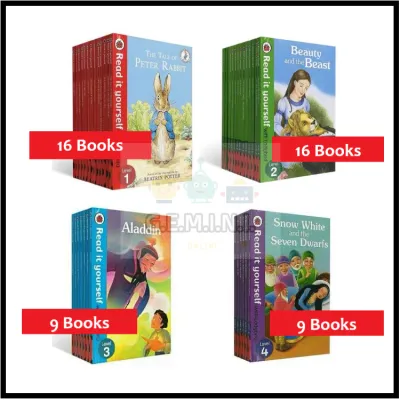
Products mentioned in this guide


212 Lazada user ratings
帮助孩子培养阅读兴趣。, 引人入胜的故事,适合小孩子。, Helps children develop a love for reading., Great collection for early readers!, Suitable for children of diffe…Read full reviewShow less
帮助孩子培养阅读兴趣。, 引人入胜的故事,适合小孩子。, Helps children develop a love for reading., Great collection for early readers!, Suitable for children of different reading levels., High-quality books with beautiful illustrations.,
I think is good for older children. My grandchildren are about 1yr old so they will tear the books as is made of paper inside.
Perfect for building reading skills., Engaging stories for young children., Great collection for early readers!,
Received with a day of ordering Well packed Intact despite the raining season
"The delivery by the seller was fast. Thank you!"
8 Lazada user ratings
Great collection for young readers,
Prompt delivery- good value


29 Lazada user ratings
super good books especially for my K2 granddaughter. she's happy with the purchase. fast delivery too!Encourages independent reading, Good v…Read full reviewShow less
super good books especially for my K2 granddaughter. she's happy with the purchase. fast delivery too!Encourages independent reading, Good variety of stories,
Books took a little longer than expected to be delivered but arrived in good condition. All 9 books accounted for. Thank you.
Good set for readers at the specific level. Fun and big illustrations. Good value
fast delivery, books are well packed with bubble wrap. Thank you Seller.
Good quality and fast delivery. Thanks

24 Lazada user ratings
my second purchase. levels 3 and 4. fir granddaughter. fast arrival. but handling needs to improve. well packed, but still received with cor…Read full reviewShow less
my second purchase. levels 3 and 4. fir granddaughter. fast arrival. but handling needs to improve. well packed, but still received with corner of book dented.
High-quality paperback format, Engaging illustrations to captivate young readers, Encourages independent reading, Great addition to any chil…Read full reviewShow less
High-quality paperback format, Engaging illustrations to captivate young readers, Encourages independent reading, Great addition to any child's bookshelf,
Product is good and nice packing. Although ordered Aladeen and got other stories book 🙂
Books received in good condition and my kids enjoyed the stories
Very nice , my daughter love it
Prices are valid at publication and may change. Please refer to the product page for the latest price.
To determine if a book is suitable for your child’s current independent reading ability, you can use a simple diagnostic tool known as the “five-finger rule.” Open the book to any page containing a representative amount of text and ask your child to read it aloud. For every word they struggle with or cannot decode, have them raise one finger. If they encounter five or more unfamiliar words on a single page, the book is likely too difficult for independent reading and should be kept for shared reading sessions instead. A count of two or three fingers indicates an ideal instructional level, while zero or one finger means the book is perfect for building independent reading fluency.
Remember that starting at an easier level is always preferable to pushing a child into harder texts prematurely. Successfully reading a simpler book from cover to cover provides an immediate sense of accomplishment. This early success builds the momentum and self-belief necessary to tackle more complex vocabulary and sentence structures later on.
Preparing for a Positive Reading Environment
Before opening a book, it is important to establish a physical and emotional space that minimizes anxiety and maximizes focus. In a busy household, finding a quiet, comfortable, and well-lit corner is key. This could be a cozy spot on a sofa, a dedicated reading nook in their bedroom, or a quiet desk away from the main household traffic. Ensure all digital distractions, such as televisions, tablets, and smartphones, are turned off or placed in another room to help your child maintain concentration.

Consistency is far more valuable than session length when establishing a reading routine. A daily 10 to 15-minute reading session is highly effective and fits easily into a busy after-school or bedtime schedule. Short, regular sessions prevent cognitive fatigue and keep the experience light and manageable. Over time, this consistent routine helps children anticipate reading time as a relaxing, predictable part of their day.
Managing your own expectations as a parent is equally crucial for maintaining a positive atmosphere. Approach each session with a collaborative, encouraging mindset rather than a strictly instructional one. Avoid treating the session as a test; instead, view it as a shared activity where mistakes are welcomed as natural steps in the learning process. Your calm and encouraging tone will directly influence how comfortable your child feels when facing challenging words.
Step-by-Step Guide to a Confidence-Building Reading Session
To get the most out of each Ladybird Read It Yourself book, it helps to follow a structured, three-phase approach to your reading sessions. By breaking the session into activities before, during, and after reading, you provide a supportive framework that guides your child through the text and reinforces their comprehension.
Before Reading: Picture Walks and Predictions
Before your child attempts to decode any words, take a few minutes to explore the book together visually. Flip through the pages to conduct a “picture walk,” discussing the illustrations and encouraging your child to guess what might happen in the story. This pre-reading step builds essential context, making the text much easier to understand once they begin reading.
During this visual exploration, point out recurring characters, setting clues, and familiar sight words on the cover and the opening pages. Ask open-ended questions such as, “Where do you think this story takes place?” or “How do you think this character is feeling?” This activates your child’s prior knowledge and helps them anticipate the vocabulary they are about to encounter, reducing the cognitive load of decoding.
During Reading: Shared Reading and Scaffolding
When your child begins reading the text, use the “pause, prompt, and praise” method to support them through difficult passages. When they encounter an unfamiliar word, resist the urge to supply it immediately. Instead, pause for three to five seconds to give them the opportunity to self-correct. If they remain stuck, offer a gentle prompt, such as asking them to look at the picture clues or to sound out the phonics of the word. Once they successfully decode the word, offer specific praise for their effort and persistence.
To prevent fatigue and maintain the flow of the story, consider taking turns reading. You might read one page while your child reads the next, or you can read the longer narrative sections while they read the dialogue. This shared reading approach keeps the story moving forward, models expressive reading, and prevents the child from feeling overwhelmed by a wall of text.
Encourage your child to rely on a combination of phonics sounds and visual clues rather than guessing blindly based on the first letter of a word. Teach them to look at the illustrations to confirm if their decoded word makes sense within the context of the scene. This builds active problem-solving skills and reinforces the connection between words and meaning.
After Reading: Using the Comprehension Puzzles
Every Ladybird Read It Yourself book contains built-in comprehension puzzles and activities at the back. Approach these exercises as a fun, low-stakes game rather than a formal assessment. Let your child take the lead in solving the puzzles, and celebrate their correct answers while gently guiding them back to the text if they need help finding a solution.
Once the puzzles are complete, ask open-ended questions about their favorite parts of the story or the characters’ choices. Questions like, “What would you have done in that situation?” or “Why do you think the character made that choice?” validate their comprehension and show them that reading is about understanding and enjoying a story, not just pronouncing words correctly.
Troubleshooting Common Reading Roadblocks
It is entirely normal for children to encounter obstacles, lose focus, or experience frustration during reading sessions. If your child repeatedly struggles with or misreads the same high-frequency word, avoid correcting them repeatedly in a way that causes tension. Instead, gently point to the word, say it clearly, and have them repeat it. You can also play a quick game of “find the word” on other pages of the book to build visual familiarity and reinforce recognition in a playful manner.
If your child becomes visibly tired, frustrated, or upset during a session, it is best to end the activity gracefully. Forcing a child to complete a book when they are crying or checked out associates reading with negative emotions, which can damage their long-term confidence. Simply close the book and say, “You did some excellent reading today. Let’s put a bookmark here and finish the rest tomorrow.” This preserves a positive association with reading and respects their emotional limits.
During periods of low motivation or reading slumps, try alternating between reading the physical book and listening to an accompanying audiobook version if available. Listening to the story while following along with the printed text helps build word-sound associations, improves pronunciation, and keeps the child engaged with the narrative without the pressure of independent decoding.
Tracking Progress Without Adding Pressure
To sustain your child’s motivation over time, focus on tracking qualitative milestones rather than focusing solely on reading speed or book levels. Notice and celebrate subtle signs of growing confidence, such as when your child self-corrects a mistake, reads with natural expression, or shows curiosity about what happens next in the plot. These are clear indicators of developing literacy skills and a healthy reading mindset.
Creating a simple, visual reading log can also be highly motivating. You can design a colorful chart where your child can place a sticker for every book completed or for showing great effort during a session. This visual representation of their hard work builds a sense of pride and ownership over their reading journey without introducing competitive pressure.
Watch for clear, observable signals that indicate your child is ready to transition to the next level in the series. If they can read books at their current level with high accuracy, minimal hesitation, and strong comprehension of the storyline, they are likely ready to try the next level. Introduce the new level gradually, starting with shared reading sessions to ensure they feel supported as they take on the new challenge.
Frequently Asked Questions (FAQ)
How often should my child read a Ladybird Read It Yourself book?
Short, daily reading sessions of 10 to 15 minutes are ideal for building consistent habits and maintaining momentum. Re-reading the same book multiple times is highly beneficial, as it helps children build word recognition, reading speed, and overall fluency. A balanced weekly routine might involve reading a familiar, favorite book a few times to build confidence, and then introducing a new book at the same level when they feel ready for a fresh challenge.
Can I use these books if my child is already reading chapter books?
Yes, the higher levels of the Ladybird Read It Yourself series can still provide valuable support for children transitioning to longer texts. These books help build reading stamina and reinforce complex comprehension skills without the intimidating layout of a full chapter book. Once your child can read Level 4 books independently with ease, shows strong comprehension, and expresses an interest in longer narratives, they can transition fully to early chapter books.
Community discussion
Share your experience or ask a question. Comments are reviewed before publication.