
To truly understand the shadows that haunt modern horror, you must trace them back to their architectural and psychological origins. A chronological gothic horror reading order is not merely a historical exercise; it is an immersive journey through the evolving fears of humanity over more than two and a half centuries. By reading these foundational texts in the order they were published, you can witness firsthand how the genre transformed from tales of external, supernatural threats in distant ruins into deeply internalized, psychological terrors that dwell within our own homes and minds.
This curated timeline takes you from the very birth of the genre in the mid-18th century through its Victorian golden age, its mid-20th-century domestic reinventions, and finally into the diverse, socially conscious voices of contemporary gothic fiction. Along the way, you will see how authors have continuously repurposed the same core elements—isolation, the weight of the past, and the breakdown of rationality—to reflect the unique anxieties of their respective eras.
Why a Chronological Gothic Horror Reading Order Matters
Approaching gothic literature chronologically allows you to appreciate the subtle dialogue that occurs between authors across generations. The genre has never been static; instead, it acts as a cultural mirror, shifting its focus as society’s collective anxieties evolve. When you read these works in sequence, you can track the fascinating migration of the “haunted space” from the literal, remote medieval castles of the 1700s to the dark city alleys of the late 19th century, and eventually to the claustrophobic suburban households of the 20th century.
Products mentioned in this guide

1 Lazada user ratings
💰Price:Great 📚Content Quality:Great 🔍Quality:Great ✍️Author:Great 📝Content:Great *Awesome Purchase! *Sister liked it! *Item is as advertised …Read full reviewShow less
💰Price:Great 📚Content Quality:Great 🔍Quality:Great ✍️Author:Great 📝Content:Great *Awesome Purchase! *Sister liked it! *Item is as advertised on the product page *No damage on the packaging or the item itself *Paying & receiving the item from the Delivery Courier was a breeze *Will order more from the Seller & Lazada! KUDOS!
Prices are valid at publication and may change. Please refer to the product page for the latest price.
These spatial shifts directly reflect the changing historical anxieties of each era. The early gothic writers channeled the tension between Enlightenment rationalism and lingering medieval superstitions. As the Industrial Revolution took hold, the dread shifted toward scientific overreach and urban decay. By the mid-20th century, post-war trauma and shifting family dynamics turned the focus inward, transforming the home itself into a site of psychological warfare. Understanding this context prevents older works from feeling merely old-fashioned; instead, they reveal themselves as radical, boundary-pushing responses to their times.
Furthermore, a chronological approach helps you set realistic expectations for your reading experience. The prose styles, pacing, and narrative structures of the 18th century differ vastly from those of the Victorian era or the modern day. By starting at the beginning, you gradually build your tolerance for dense, descriptive, and epistolary formats, allowing you to appreciate the slow-burn atmosphere of early classics rather than rushing through them in search of modern jump scares.
The 18th Century: Castles, Ruins, and the Birth of the Sublime
Your chronological journey begins in the late 1700s, an era dominated by the concept of the “sublime”—an aesthetic quality of greatness, whether physical, moral, intellectual, or aesthetic, that inspires awe and a pleasing sort of terror. The foundational texts of this period established the architectural and atmospheric rules that still define the genre today, relying heavily on remote European settings, ancient curses, and vulnerable protagonists trapped in vast, labyrinthine structures.

To understand where it all began, you must start with Horace Walpole’s The Castle of Otranto (1764). Widely recognized as the very first gothic novel, Walpole’s work initiated the trope of the cursed ancestral lineage and the oppressive, malevolent castle. The story, filled with bizarre supernatural occurrences and melodramatic flights, set the stage for everything that followed by blending medieval romance with modern realism.
Three decades later, Ann Radcliffe refined the genre with The Mysteries of Udolpho (1794). Radcliffe introduced a crucial literary technique known as the “explained supernatural,” where seemingly ghostly phenomena are eventually revealed to have rational, real-world explanations. Her focus on high-suspense terror rather than visceral horror allowed readers to experience the thrill of the supernatural without violating their rational sensibilities, making her one of the most popular and influential writers of her time.
In stark contrast to Radcliffe’s restraint, Matthew Lewis’s The Monk (1796) pushed the genre into much darker, more transgressive territory. Lewis abandoned the explained supernatural in favor of genuine demonic forces, moral corruption, and physical horror. By exploring the depravity of a respected capuchin monk, the novel shocked contemporary society with its explicit depictions of lust, violence, and spiritual ruin, establishing a branch of the gothic that directly confronted the depths of human malice.
When reading these 18th-century texts, navigating the dense, highly descriptive, and sometimes winding prose can be challenging. To maintain your momentum, try focusing on the rich atmosphere and the theatricality of the characters rather than expecting rapid plot progression. Reading these works aloud or listening to high-quality audiobooks can also help you adapt to the rhythmic, archaic sentence structures of the period.
The 19th Century: Science, Psychology, and Urban Shadows
As the 19th century dawned, the gothic genre underwent a profound transformation. The industrial age brought rapid scientific advancement and massive urban migration, causing writers to move their stories away from remote continental ruins and into modern laboratories, expanding cities, and the complex terrain of the human psyche.
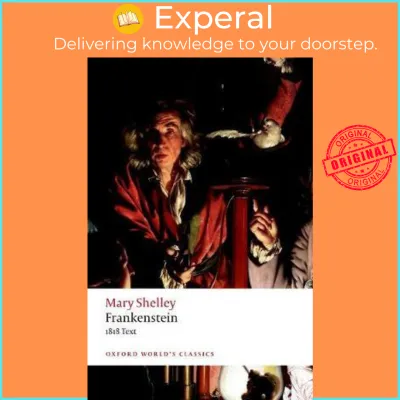
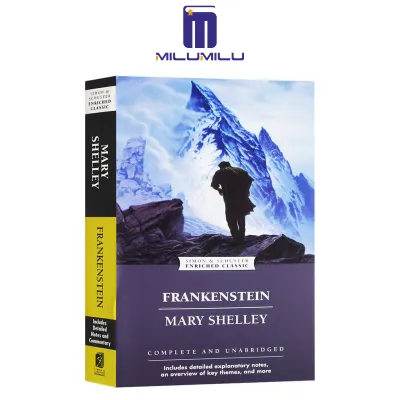
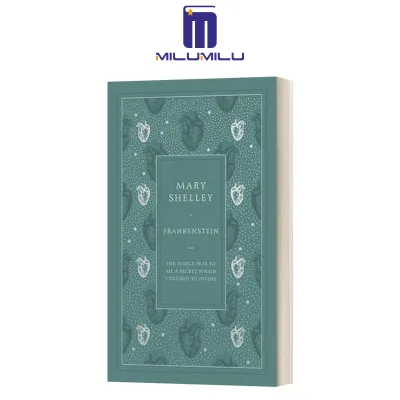
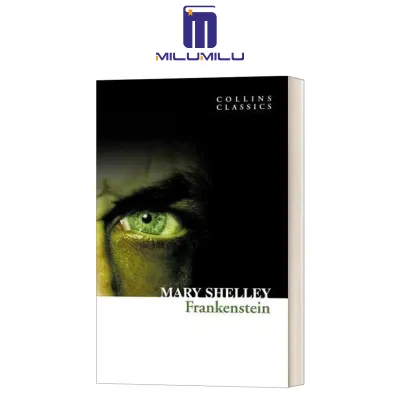
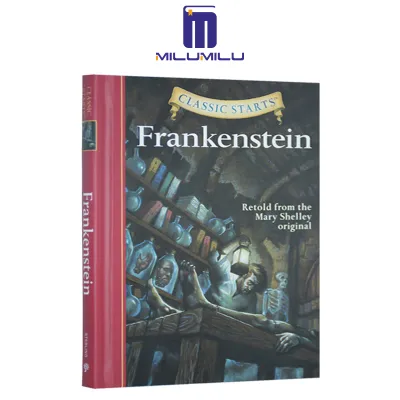
This shift is perfectly embodied by Mary Shelley’s Frankenstein (1818). Written during a rainy summer in Switzerland, Shelley’s masterpiece represents the birth of science fiction within a gothic framework. Instead of an ancient curse or a medieval ghost, the monster is born from scientific hubris and the spark of electricity. The novel brilliantly explores the anxieties of creation, parental abandonment, and the ethical boundaries of scientific progress, shifting the source of dread from the supernatural to human ambition.
By the mid-19th century, Edgar Allan Poe began publishing short stories that internalized gothic dread. In works like The Fall of the House of Usher and The Tell-Tale Heart, Poe pioneered the use of highly unreliable narrators, suggesting that the ultimate horror does not lurk in a haunted hallway, but within the fractured mind of the observer. His stories demonstrated that psychological instability could be far more terrifying than any physical monster.
Toward the end of the century, Bram Stoker’s Dracula (1897) brought the ancient, superstitious forces of the past directly into the heart of modern, high-tech London. Utilizing an epistolary format composed of journal entries, letters, and telegrams, Stoker created a sense of immediate, documentary-style realism. The novel tapped into late-Victorian anxieties regarding reverse colonization, disease transmission, and the threat that ancient, primal forces posed to rational, industrial society.
Your 19th-century reading should conclude with Henry James’s The Turn of the Screw (1898). This novella represents the pinnacle of Victorian psychological ambiguity. By presenting a governess who believes she is protecting two young children from the malevolent ghosts of former servants, James leaves you to decide whether the spirits are real or merely the projections of a deeply repressed and unstable mind, cementing the shift toward psychological uncertainty.
The 20th Century: Domestic Hauntings and Regional Dread
In the 20th century, gothic horror adapted to a rapidly changing world by turning its focus toward the domestic sphere, family trauma, and distinct regional landscapes. The grand castles of the past were replaced by isolated country estates, suburban homes, and decaying communities, proving that the most terrifying secrets are often those kept by our own families.
Your exploration of this era should begin with Daphne du Maurier’s Rebecca (1938). This brilliant gothic romance and suspense novel centers on memory, grief, and estate inheritance. The haunting of the grand estate, Manderley, is not carried out by a physical specter, but by the lingering, oppressive memory of the narrator’s husband’s deceased first wife, demonstrating how the past can completely dominate and suffocate the present.
Two decades later, Shirley Jackson’s The Haunting of Hill House (1959) redefined the haunted house story for the modern era. Jackson’s Hill House is not merely a setting; it is a sentient, malevolent, and psychologically manipulative entity that actively feeds on the vulnerability of its protagonist, Eleanor Vance. Jackson’s clinical, deeply unsettling prose explores the fragile boundaries of sanity and the terrifying isolation of the human condition.
During this period, the genre also branched out into Southern Gothic, a subgenre that traded European castles for the decaying plantations and eccentric, isolated communities of the American South. Writers like Flannery O’Connor and William Faulkner used grotesque characters and bleak situations to explore the moral decay, racial guilt, and historical trauma of a post-Civil War society, proving that regional history can be its own inescapable ghost.
To round out the 20th century, Richard Matheson’s Hell House (1971) offers a stark contrast to Jackson’s psychological subtlety. Matheson escalates the physical and paranormal intensity, sending a team of scientific researchers into a notoriously violent haunted house. The novel combines modern scientific inquiry with visceral, aggressive supernatural forces, reflecting the more explicit and intense horror trends of the late 20th century.
Contemporary Gothic: Modern Anxieties and Global Voices
In the 21st century, contemporary authors continue to revitalize classic gothic tropes, using them to address modern social, cultural, and systemic anxieties. Today’s gothic literature has expanded far beyond its original Eurocentric boundaries, incorporating global perspectives and subverting traditional narratives to explore diverse experiences of marginalization and trauma.
This modern evolution is powerfully illustrated by Toni Morrison’s Beloved (1987), which bridges the late 20th and early 21st-century literary landscapes. Morrison utilizes the classic ghost story structure to confront the literal and psychological haunting of slavery. The specter in the novel is not a generic spirit, but the physical manifestation of historical trauma and maternal grief, demonstrating how systemic horrors leave scars that persist across generations.
More recently, Silvia Moreno-Garcia’s Mexican Gothic (2020) offers a brilliant reimagining of the classic “isolated estate” trope. Set in 1950s Mexico, the novel subverts colonial and patriarchal narratives by placing a glamorous, sharp-witted Mexican socialite in a decaying mansion run by an aristocratic British family. Moreno-Garcia uses the traditional elements of the genre—such as family curses and claustrophobic settings—to critique eugenics, exploitation, and cultural imperialism.
When seeking out contemporary works, it is helpful to distinguish true gothic literature from general mainstream horror. Look for novels where the setting functions as an active character, where the plot is driven by the inescapable weight of the past, and where the atmosphere is defined by a slow-burning sense of dread rather than rapid-fire action. Modern gothic is less about monsters jumping from the dark and more about the unsettling realization that the structures we inhabit are built on unstable, haunted foundations.
Because modern gothic literature frequently deals with intense, real-world issues such as systemic oppression, abuse, and generational trauma, it is highly recommended to check content warnings and thematic triggers before starting a new book. These contemporary works often use the safety of genre conventions to explore deeply painful human experiences, making a little advance preparation valuable for a comfortable reading journey.
How to Curate and Pace Your Gothic Reading Journey
Embarking on a multi-century reading journey requires a bit of strategy to keep your momentum high and avoid reading fatigue. Because the language and pacing of 18th and 19th-century texts can feel dense, it is highly beneficial to choose annotated or critical editions. Publications such as Oxford World’s Classics or Penguin Classics offer invaluable historical introductions, explanatory footnotes, and glossaries that clarify archaic terms and cultural references, significantly enriching your understanding of the text.
Before purchasing any physical or digital copy, always take a moment to verify the specific edition, language, medium, and file format. If you are reading translated works, research the translator’s reputation to ensure you are getting a faithful and readable version. For digital readers, double-check device compatibility and regional restrictions, as some e-book formats may vary by platform or location.
To maintain your reading momentum, avoid tackling several massive novels back-to-back. Instead, try mixing dense, lengthy works with shorter gothic novellas or short story collections. For example, following a dense novel like The Mysteries of Udolpho with a few sharp, atmospheric short stories by Edgar Allan Poe or Sheridan Le Fanu can refresh your mind while keeping you fully immersed in the gothic atmosphere.
As you progress through your chronological list, consider keeping a reading journal to track the evolution of specific tropes. Note how the archetype of the persecuted heroine transforms over time, how the “madwoman in the attic” is reinterpreted by different generations, or how the concept of the monster shifts from external beast to internal psychological state. This active engagement makes the historical connections between the texts much more vivid and rewarding.
When it comes to sourcing these books, many of the 18th and 19th-century classics are in the public domain and can be downloaded legally and free of charge from authorized platforms like Project Gutenberg or Standard Ebooks. For physical copies, modern releases, and critical editions, you can explore local physical bookstores in Singapore or reputable online marketplaces. When budgeting for physical paperbacks, you can generally expect to spend between S$15 and S$30 per volume, depending on the publisher and the depth of the critical annotations included.
Frequently Asked Questions (FAQ)
What is considered the very first gothic horror novel?
Horace Walpole’s The Castle of Otranto, published in 1764, is widely recognized as the very first gothic horror novel. When it was first released, Walpole famously presented the book as a translated medieval manuscript from Italy, a clever hoax designed to shield himself from contemporary literary critics who might look down on a story filled with supernatural elements. The novel’s immediate success established the foundational tropes of the genre, including ancestral curses, secret passages, and a dark, brooding castle setting.
Is Stephen King's work considered gothic horror?
While Stephen King is primarily known as a mainstream horror and suspense writer, many of his most famous works draw heavily on classic gothic traditions. For example, The Shining features an isolated, sentient hotel that functions exactly like a traditional haunted castle, while ‘Salem’s Lot reimagines the classic vampire invasion of Dracula in a small, modern American town. However, because King frequently blends these elements with contemporary realism, science fiction, and pop culture, his broader catalog is generally classified as modern horror rather than strict gothic fiction.

Community discussion
Share your experience or ask a question. Comments are reviewed before publication.