
Choosing a digital piano keyboard can feel overwhelming when confronted with technical jargon like weighted keys, polyphony, and touch sensitivity, but understanding these specifications is the key to finding an instrument that feels and sounds like a real acoustic piano. These three features directly determine how closely the keyboard mimics the physical resistance of acoustic hammers, how many notes can ring out simultaneously without cutting off, and how responsively the instrument translates your finger strength into musical volume and tone. By decoding these specifications, you can confidently select a digital piano that matches your current playing level, budget, and long-term musical goals.
How Do Weighted Keys Change the Feel of a Digital Piano Keyboard?
Weighted keys change the feel of a digital piano keyboard by physically mimicking the mechanical resistance and hammer action of a traditional acoustic piano. When you press a key on an acoustic piano, a complex wooden action throws a felt-covered hammer against a string; weighted digital keys use small metal weights and pivot points to replicate this downward resistance and upward return. This physical feedback is crucial because it builds finger strength, muscle memory, and fine motor control, allowing players to transition seamlessly between digital and acoustic instruments.
Digital piano keyboards generally fall into three categories: fully weighted (often called hammer action), semi-weighted, and unweighted (or synth-action). Fully weighted keys offer the most authentic resistance, often featuring “graded” action where the lower keys feel slightly heavier than the higher keys, just like on an acoustic piano. Semi-weighted keys use light springs combined with small weights to offer some resistance, making them highly portable and easier on untrained fingers, though they lack the realistic rebound needed for classical training. Unweighted synth-action keys rely entirely on spring tension, offering almost no resistance, which is ideal for rapid synthesizer leads or organ playing but unsuitable for learning traditional piano techniques.
Products mentioned in this guide
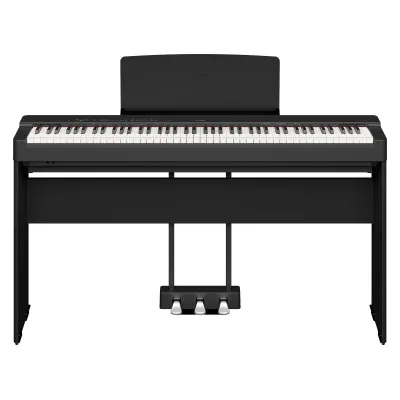
37 Lazada user ratings
item is delivered promptly within 3 working days. delivery man will call 30 min in advance. so far working well. sound uality wise is very g…Read full reviewShow less
item is delivered promptly within 3 working days. delivery man will call 30 min in advance. so far working well. sound uality wise is very good. highly recommended to buy this item.
👜Portability:easy to install with stand. 🎧Sound Quality:Good quality sound with pressure key. 📚Learning Tools:no review yet.
Excellent sound quality, Perfect for home use, high quality material. Good customer service.
Fast shipping, Excellent sound quality, easy set up.My son likes it very much.
50 Lazada user ratings
Realistic weighted keys, High-quality Casio brand, 1-year warranty included, Slim and portable design, Comes with a music rest. fast deliver…Read full reviewShow less
Realistic weighted keys, High-quality Casio brand, 1-year warranty included, Slim and portable design, Comes with a music rest. fast delivery. highly recommend.
Service is good, answer enquiry promptly. Thank you for everything. Sound quality as good as grand piano for beginner learners. Easy set up.
Very nice digital piano with 88keys. Slim and simple that is just what I wanted.
Good quality product

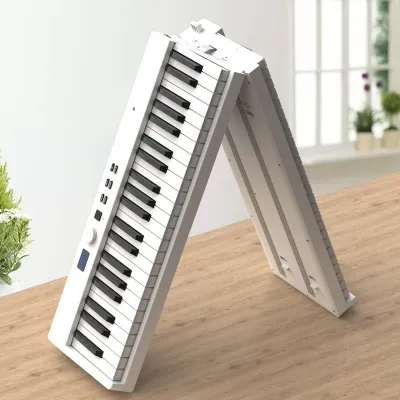
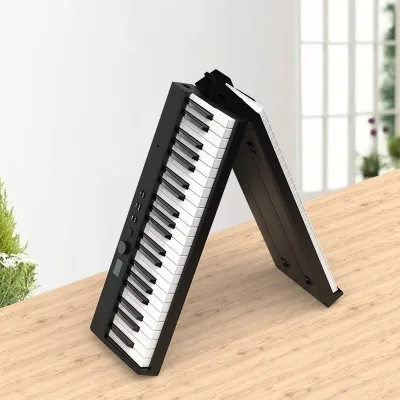
6 Lazada user ratings
Item came much earlier than what was the initial estimation by seller. Bought it for my kid as it seems that he has shown interest in piano …Read full reviewShow less
Item came much earlier than what was the initial estimation by seller. Bought it for my kid as it seems that he has shown interest in piano when he is taking his music exploration class. Like the color and impressed by the sound quality of the keyboard for such a size.
Really like this keyboard. It is fun, light and very portable. Easy to use, Ideal for kids,
Prices are valid at publication and may change. Please refer to the product page for the latest price.
When matching key action to your goals, consider your primary musical path. If your objective is to learn classical piano, prepare for formal examinations, or play acoustic pianos in public spaces, investing in a fully weighted hammer-action keyboard is highly recommended from day one. If you primarily want to produce electronic music, play in a casual band, or need a highly portable instrument for travel, a semi-weighted keyboard offers a practical compromise between playability and weight.
What Is Polyphony and How Many Notes Do You Really Need?
Polyphony refers to the maximum number of individual notes or voices a digital piano’s sound engine can produce at the exact same moment. If you play a chord that exceeds this limit, the instrument’s processor must prematurely cut off the oldest playing notes to make room for the new ones, resulting in an unnatural, abrupt silence.

While a human player only has ten fingers, polyphony is consumed much faster than you might expect due to common playing techniques and digital features. When you press the sustain pedal, every note you play continues to ring out and consume a unit of polyphony until you release the pedal. Furthermore, if you layer two sounds together—such as piano and strings—each key press instantly consumes two notes of polyphony instead of one. Stereo sampling, where separate left and right audio channels are generated for a single note, also doubles the polyphony requirement, meaning a single sustained chord can quickly exhaust a low-polyphony sound engine.
To determine how much polyphony you need, evaluate your current and future repertoire. Beginners playing simple, single-note melodies can usually manage with 64 notes of polyphony without experiencing dropped notes. Intermediate players who are beginning to use the sustain pedal extensively and experiment with basic sound layering should look for a minimum of 128 notes of polyphony to ensure smooth transitions. Advanced pianists playing complex classical pieces, rapid arpeggios, or dense multi-layered arrangements will benefit from 192 or 256 notes of polyphony, which virtually guarantees that no notes will be cut off during expressive performances.
How Does Touch Sensitivity Affect Your Musical Expression?
Touch sensitivity determines how responsively a digital piano translates the physical speed and force of your keystrokes into changes in volume and tonal character. Without touch sensitivity, every key press produces the exact same volume regardless of whether you strike the key softly or forcefully, stripping the music of its emotional dynamics.
The underlying mechanism relies on velocity sensors located beneath each key. These sensors measure the fraction of a millisecond it takes for a key to travel from its resting position to the bottom of the keybed. A faster key strike indicates a harder hit, prompting the sound engine to play a louder, brighter sample, while a slower strike triggers a softer, mellower sound. Most modern digital pianos allow you to adjust this sensitivity setting—typically offering light, medium, and heavy presets—to accommodate different finger strengths, playing styles, or physical limitations.
Developing a responsive touch is essential for mastering musical expression and dynamic control, such as playing pianissimo (very soft) or fortissimo (very loud). A keyboard with poor or non-existent touch sensitivity can lead to bad habits, as players fail to learn how to control their finger velocity to balance the melody against the accompaniment. For anyone serious about learning the piano as an expressive art form, a highly responsive, velocity-sensitive keyboard is a non-negotiable requirement.
How Should You Prioritize These Specs When Comparing Models?
Prioritizing digital piano specifications depends entirely on your budget, space constraints, and long-term musical intentions. By matching these technical features to your specific user profile, you can avoid overpaying for advanced processing power you do not need or buying an instrument you will quickly outgrow.
For aspiring pianists and students aiming for classical training, physical key action and touch sensitivity must take absolute priority over extra sound effects or high polyphony counts. A budget-conscious beginner should look for a model that offers at least a graded hammer action and basic touch sensitivity, even if the polyphony is limited to 64 or 128 notes. Conversely, music producers, gigging keyboardists, or hobbyists focused on layering multiple digital instruments should prioritize high polyphony and connectivity options, and may comfortably opt for a lighter, semi-weighted keybed to save on physical weight and cost.
Before making a purchase, always verify the exact specifications on the manufacturer’s official product sheets, looking closely for terms like “graded hammer action” or “tri-sensor scaling” rather than generic marketing labels. Because written specifications cannot fully capture the subjective, tactile feel of a keyboard or the warmth of its sound engine, it is highly recommended to test the instruments in a physical music store whenever possible. Pay close attention to how the keys rebound under your fingers and how naturally the sound decays when you hold down the sustain pedal, ensuring the digital piano keyboard feels comfortable and inspiring to play.

Community discussion
Share your experience or ask a question. Comments are reviewed before publication.