
Choosing the right number of keys on a piano keyboard is one of the most important decisions you will make before bringing an instrument into your home. The standard acoustic piano has 88 keys, representing the complete range of musical notes used by classical composers and modern artists alike. However, keyboards also commonly come in 76-key and 61-key configurations, each offering distinct advantages in terms of portability, cost, and space.
To determine how many keys you actually need, you must evaluate your musical goals, your preferred genres, and your physical living space. While classical students almost always require a full-size keyboard, casual players and music producers often find that smaller layouts fit their workflow much better. Understanding the precise trade-offs of each size will prevent you from buying an instrument you might quickly outgrow or one that is too cumbersome for your daily life.
The Physical and Musical Differences Between 61, 76, and 88 Keys
An 88-key keyboard provides a full range of seven octaves plus three lower notes, spanning from A0 to C8. This matches the configuration of a standard acoustic grand piano, ensuring that any piano piece can be played without compromise. These models typically measure 130 to 140 centimeters in width and often require a sturdy stand or a permanent wooden cabinet due to their weight.
Products mentioned in this guide
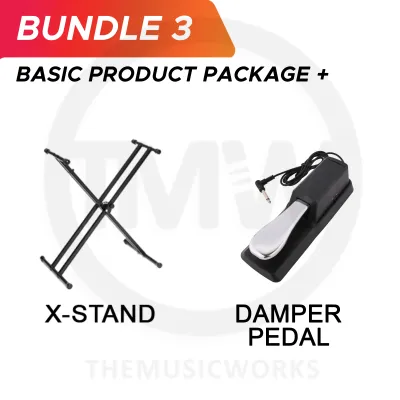
69 Lazada user ratings
The Casio CT-S1 is lightweight and portable., The Casio CT-S1 has a sleek design., will test it next few days and weeks. The keyboard have a…Read full reviewShow less
The Casio CT-S1 is lightweight and portable., The Casio CT-S1 has a sleek design., will test it next few days and weeks. The keyboard have a premium build.
The Casio CT-S1 is perfect for beginners., metronome only has 1 tempo. Delivery is too slow
Super fast delivery in next day. Well packed. Hope is suitable for my little one
Happy with the purchase. seller and driver polite and delivery is fast.
Received items the next day afternoon. Well packed. Looks really nice.
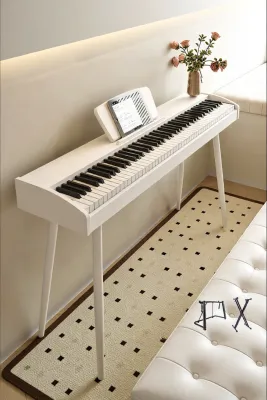
14 Lazada user ratings
The keyboard sounds clear and beautiful, and the keys feel really smooth. It has a great range of features that are perfect for beginners. I…Read full reviewShow less
The keyboard sounds clear and beautiful, and the keys feel really smooth. It has a great range of features that are perfect for beginners. It's high quality and I'm very satisfied!
The piano is absolutely beautiful. The touch feels very natural and great, and the whole thing looks high-end. Awesome!
This electric piano sounds great, it's portable, and feels good to play. Definitely recommend buying it!
My child loves it. This keyboard feels high-quality and has brought so much joy to our kid.
got the hammer keys version, the keys felt weighty and sound was good
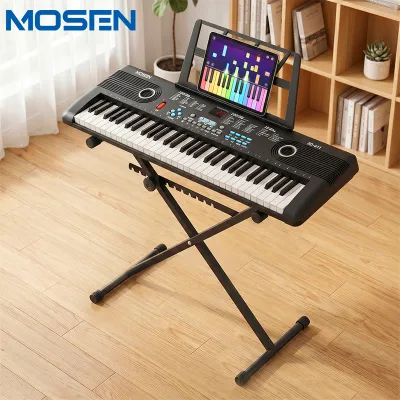
2 Lazada user ratings
Sound quality is good. Easy and useful guide provided. Item is light and portable. Seller provided regular progress update on delivery proce…Read full reviewShow less
Sound quality is good. Easy and useful guide provided. Item is light and portable. Seller provided regular progress update on delivery process and status.
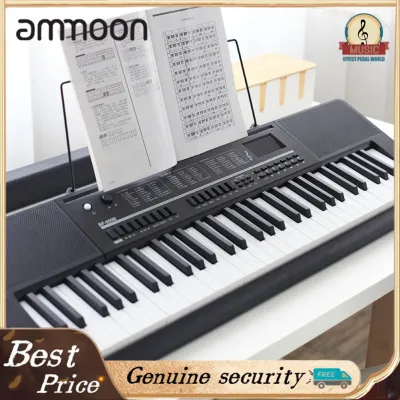
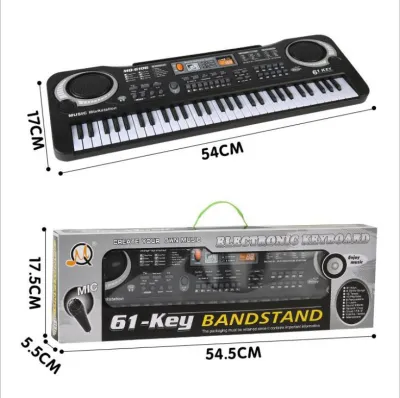
132 Lazada user ratings
Quality is good for its price. Delivery took longer than expected but still ok.
Worth for the price, can use to test kids interest to learn piano
2 keys need to press harder to work. Other than that is good👍👍
its very light weight very fast delivery thank you seller..
Great sound quality!, Stylish black design.,
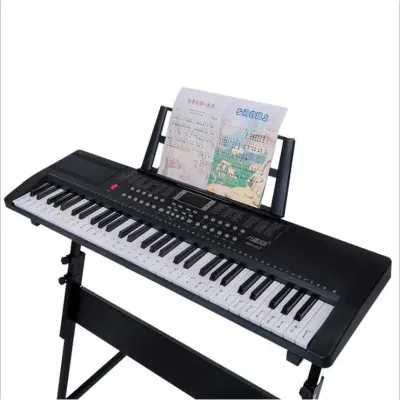
67 Lazada user ratings
The piano is easy to assemble., High-quality piano.
Fast shipping and reliable seller.,
the stand had a dent.
🎧Sound Quality: good
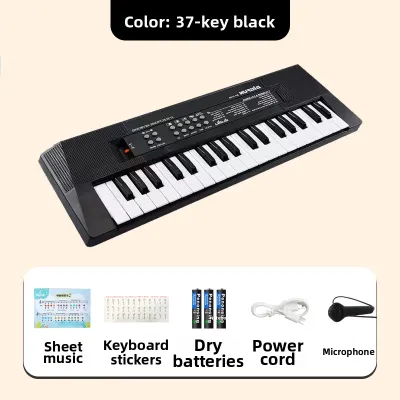
8 Lazada user ratings
For the price paid, im hqppy with the purchase. It has some nice features like backing tracks and a mic. Son is happy playing the keyboard.
The quality is really good, and I really like it.
good piano for my girl
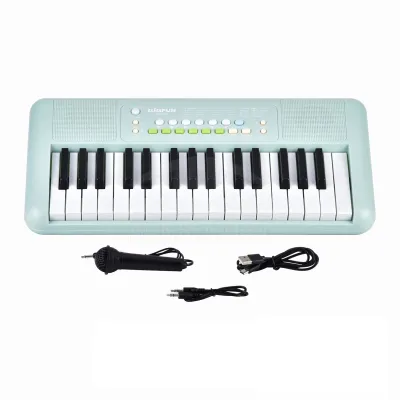
Prices are valid at publication and may change. Please refer to the product page for the latest price.
A 76-key keyboard offers a reduced range of six octaves, usually spanning from E1 to G7 or F1 to G7. This configuration strips away the extreme bass and treble notes rarely used in mainstream music. These keyboards generally measure between 115 and 125 centimeters in width, making them easier to position in tight spaces while still providing enough range for most popular songs.
A 61-key keyboard features a five-octave range, typically running from C2 to C7. This is the standard size for entry-level portable keyboards and MIDI controllers, measuring around 90 to 100 centimeters in width. Lacking the upper and lower registers, these instruments are highly compact and lightweight, often weighing under five kilograms, allowing them to sit easily on a writing desk or a basic folding stand.
The musical limitations of smaller keyboards become apparent when you play advanced classical repertoire. Masterpieces from the Romantic and Impressionist eras, such as those by Chopin, Liszt, or Debussy, frequently utilize the entire span of an 88-key piano. Attempting to play these on a 61-key or 76-key keyboard will result in running out of physical keys, forcing you to transpose octaves mid-performance and disrupting the musical flow.
Matching Key Counts to Your Skill Level and Musical Goals
For adult beginners and casual players, a 61-key keyboard is an accessible starting point. This size is adequate for learning basic music theory, practicing simple chord progressions, and playing basic melodies. However, as your skills progress and you begin to play two-handed arrangements with deep bass lines and high melodies, you will likely find the five-octave limit restrictive.

If you are purchasing an instrument for a child starting formal piano lessons, the learning curriculum should dictate your choice. Most structured piano methods, such as the ABRSM or Trinity College London syllabi, assume the student has access to a full 88-key instrument. Starting on a smaller keyboard can hinder a child’s spatial awareness and make the transition to acoustic pianos in exam halls intimidating.
For classical pianists and advanced students, an 88-key keyboard is an absolute necessity. Classical training relies heavily on developing proper finger strength, executing wide dynamic shifts, and mastering complex pedaling techniques. These skills are difficult to cultivate on smaller keyboards, which rarely feature the sophisticated key action and full pedal compatibility required for advanced classical performance.
Gigging musicians and studio producers must balance musical range with practical portability. In a home studio, a 61-key keyboard is often the ideal size for a MIDI controller, fitting comfortably on a desk alongside other equipment. For live performers in cover bands, a 76-key keyboard offers a practical compromise, providing enough range to split the keyboard into different instrument sounds while remaining light enough to transport easily.
Beyond the Key Count: Action, Touch, and Sound Quality
The number of keys is only one part of the equation; the mechanical action of those keys determines how the instrument feels to play. Fully weighted hammer action keys use physical weights and levers to replicate the resistance and rebound of an acoustic piano’s wooden hammers. This action is standard on high-quality 88-key digital pianos and is essential for building the finger strength and control needed for expressive playing.
In contrast, 61-key and 76-key keyboards often feature semi-weighted or synth-action keys. Semi-weighted keys use light weights and springs to provide moderate resistance, suitable for playing a mix of piano, organ, and synthesizer sounds. Synth-action keys are completely unweighted and rely solely on springs, offering a highly responsive feel that is excellent for fast synthesizer leads but unsuitable for developing traditional piano technique.
Key count also frequently correlates with the internal sound quality and speaker systems. High-fidelity piano samples, advanced resonance modeling, and powerful multi-speaker arrays are typically reserved for full-size 88-key digital pianos. Smaller keyboards are often designed as budget-friendly portable instruments, which may feature simpler sound engines, lower polyphony limits, and smaller speakers that lack deep bass response.
When shopping, it is crucial to check the manufacturer’s specifications for specific touch-sensitive features rather than assuming all models of a certain size feel the same. Look for terms like “graded hammer action,” which ensures the lower keys feel heavier than the higher keys. Checking for triple-sensor key tracking and escapement simulation will also help you find an instrument that responds accurately to the subtlest nuances of your touch.
Practical Constraints: Space, Portability, and Budget in Singapore
Living in a typical Singapore apartment, such as an HDB flat or a condominium, means that floor space is a premium commodity. An 88-key digital piano with a dedicated wooden cabinet occupies a significant footprint, usually requiring a clear wall space of about 140 centimeters. Before purchasing, you must measure your room carefully to ensure the instrument fits comfortably without blocking walkways or wardrobe doors.
If space is highly constrained, a portable 88-key keyboard on a folding stand offers a flexible alternative, as it can be tucked away when not in use. However, if you live in a compact studio apartment, a 61-key or 76-key keyboard might be the most practical option. These smaller models can sit easily on a standard study desk, allowing you to maintain a practice space without sacrificing valuable living area.
For musicians who regularly travel across Singapore for band rehearsals, jam sessions, or live performances, transport logistics are a major consideration. Carrying an 88-key weighted keyboard on the MRT or bus is incredibly difficult due to its length and weight, often necessitating a private hire car. A 61-key keyboard, however, fits easily into a padded gig bag with backpack straps, making it highly portable for public transport commutes.
Budget is another critical factor, and prices in Singapore vary widely depending on the key count and action type. While a basic 61-key electronic keyboard can be found for under S$200, a high-quality 88-key digital piano with weighted keys typically starts around S$600 and can exceed S$2,000. Serious learners should view this as a long-term investment; buying a cheaper, unweighted keyboard often leads to a secondary purchase within a year as your playing technique outgrows the instrument’s capabilities.
Decision Framework: Which Configuration Should You Buy?
To make your final decision, evaluate your musical aspirations and practical constraints against these clear guidelines:
Choose an 88-key keyboard if you are taking formal piano lessons, studying classical music, preparing for graded exams, or want an authentic acoustic piano experience. This configuration ensures you will never run out of notes and will develop the proper finger strength required for traditional piano playing.
Choose a 76-key keyboard if you are an intermediate player, a gigging keyboardist, or have moderate space constraints in your home. It offers a practical balance, providing enough range for most pop, jazz, and light classical pieces while remaining portable enough for regular travel.
Choose a 61-key keyboard if you are focused on music production, electronic music, or synthesizer playing, or if you are buying an instrument for a very young child. It is also the best choice if you have highly limited space or need an extremely lightweight keyboard for travel.
Before making your purchase, always verify the exact key action type in the manufacturer’s specifications, consult your piano teacher if you are taking lessons, and measure your designated room to ensure a comfortable fit.
Community discussion
Share your experience or ask a question. Comments are reviewed before publication.